Kids’ Chinese Literacy Poster Template (Pinyin Labels) Prompt
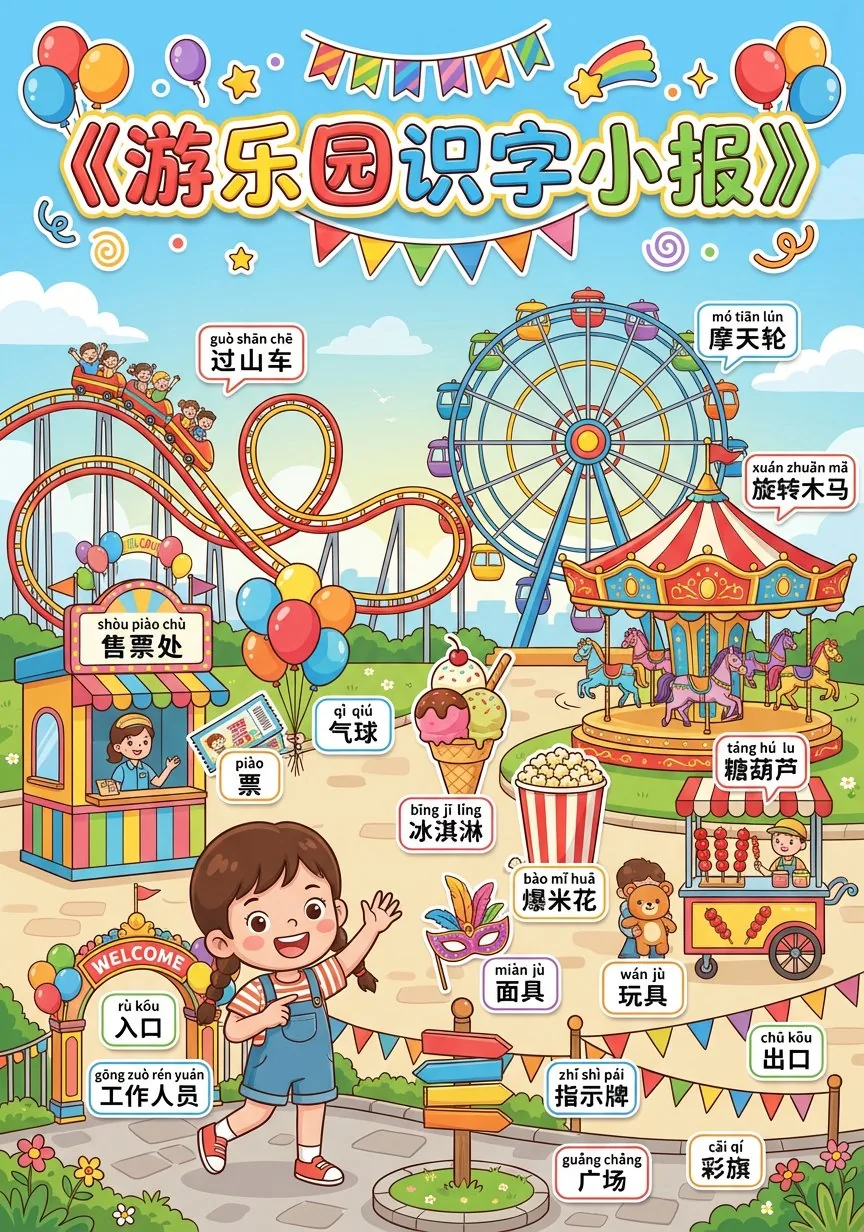
A4 vertical children’s literacy poster: a cartoon amusement-park scene with 18 objects, each labelled with pinyin and Chinese characters.
This example image was created by @lxfater with Nano Banana Pro (Gemini 3 Pro Image). The button below opens the GPT Image 2.5 generator on this site with the prompt filled in, so you can generate a similar image — results will differ from the example.
Opens the generator with this prompt filled in. Nothing is generated until you press Generate.
Full prompt
请生成一张儿童识字小报《游乐园》,竖版 A4,学习小报版式,适合 5–9 岁孩子 认字与看图识物。 一、小报标题区(顶部) 顶部居中大标题:《游乐园识字小报》 风格:十字小报 / 儿童学习报感 文本要求:大字、醒目、卡通手写体、彩色描边 装饰:周围添加与 游乐园 相关的贴纸风装饰,颜色鲜艳 二、小报主体(中间主画面) 画面中心是一幅 卡通插画风的「游乐园」场景: 整体气氛:明亮、温暖、积极 构图:物体边界清晰,方便对应文字,不要过于拥挤。 场景分区与核心内容 核心区域 A(主要对象):表现 游乐园 的核心活动(孩子们在玩游乐设施)。 核心区域 B(配套设施):展示相关的工具或物品(售票、零食、指示设施)。 核心区域 C(环境背景):体现环境特征(入口、路牌、彩旗、绿地等)。 主题人物 角色:1 位可爱卡通人物(身份:游乐园工作人员/游客小朋友皆可)。 动作:正在进行与场景相关的自然互动(如微笑指路、挥手欢迎、陪孩子玩)。 三、必画物体与识字清单(Generated Content) 请务必在画面中清晰绘制以下物体,并为其预留贴标签的位置: 1. 核心角色与设施: gōng zuò rén yuán 工作人员 shòu piào chù 售票处 guò shān chē 过山车 mó tiān lún 摩天轮 xuán zhuǎn mǎ 旋转木马 2. 常见物品/工具: piào 票 qì qiú 气球 bīng jī líng 冰淇淋 bào mǐ huā 爆米花 táng hú lu 糖葫芦 miàn jù 面具 wán jù 玩具 xiǎo qí zi 小旗子 3. 环境与装饰: rù kǒu 入口 chū kǒu 出口 zhǐ shì pái 指示牌 cǎi qí 彩旗 guǎng chǎng 广场 (注意:画面中的物体数量不限于此,但以上列表必须作为重点描绘对象;总计 18 个典型名词,适合 5–9 岁儿童识字。) 四、识字标注规则 对上述清单中的物体,贴上中文识字标签: 格式:两行制(第一行拼音带声调,第二行简体汉字)。 样式:彩色小贴纸风格,白底黑字或深色字,清晰可读。 排版:标签靠近对应的物体,不遮挡主体。 五、画风参数 风格:儿童绘本风 + 识字小报风 色彩:高饱和、明快、温暖 (High Saturation, Warm Tone) 质量:8k resolution, high detail, vector illustration style, clean lines.How to use this prompt
A detailed template for parents, teachers and early-education creators. It defines the title area, three scene zones, a character, an 18-word vocabulary list and the label format (pinyin with tones on the first line, characters on the second). Change the theme — supermarket, zoo, kitchen — and rewrite the word list; keep the zone structure so objects stay separated and easy to label. Fewer words (10–12) give larger, more accurate labels. Check every pinyin tone and character before printing — image models can still slip on small text.
Related prompts
 Infographics & Education
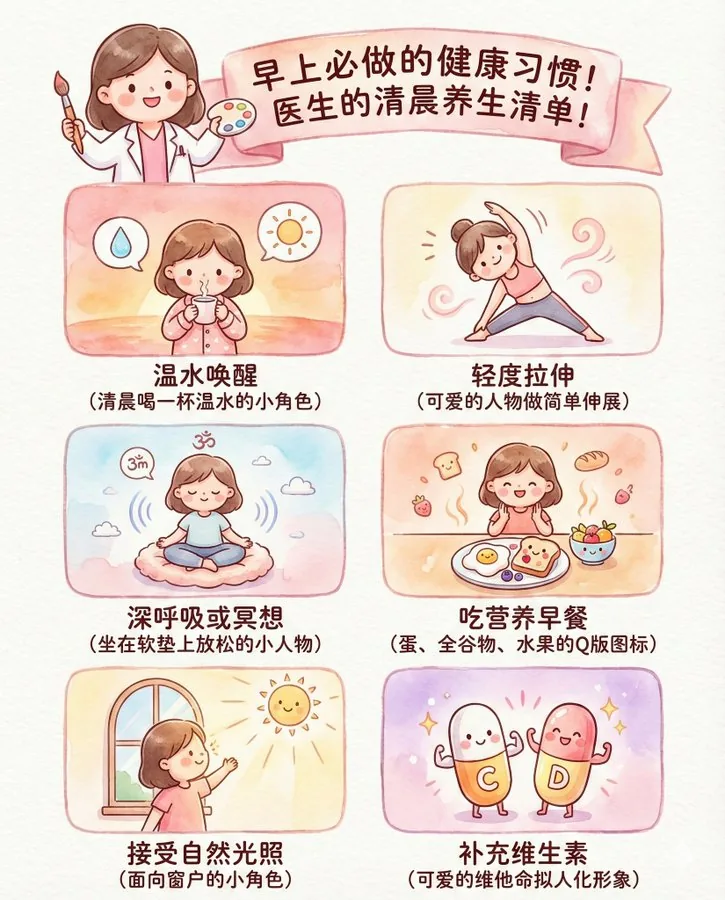
Hand-Drawn Watercolor Health Infographic Prompt
 Infographics & Education
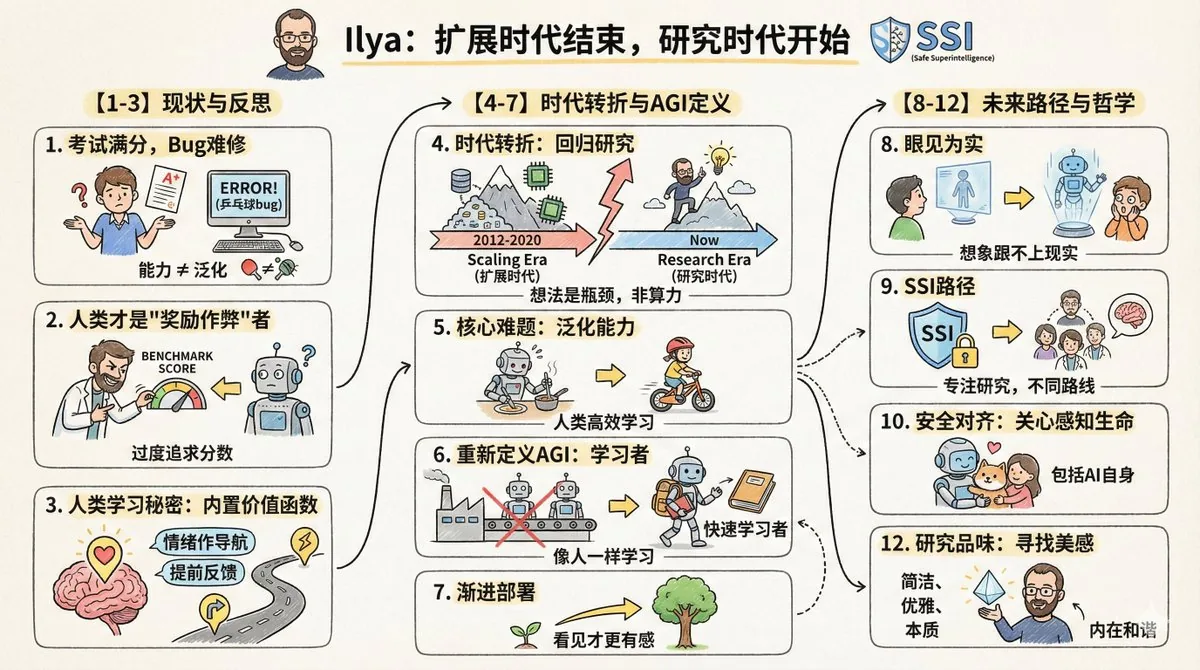
Turn Any Article into a Hand-Drawn Cartoon Infographic Prompt
 Infographics & Education
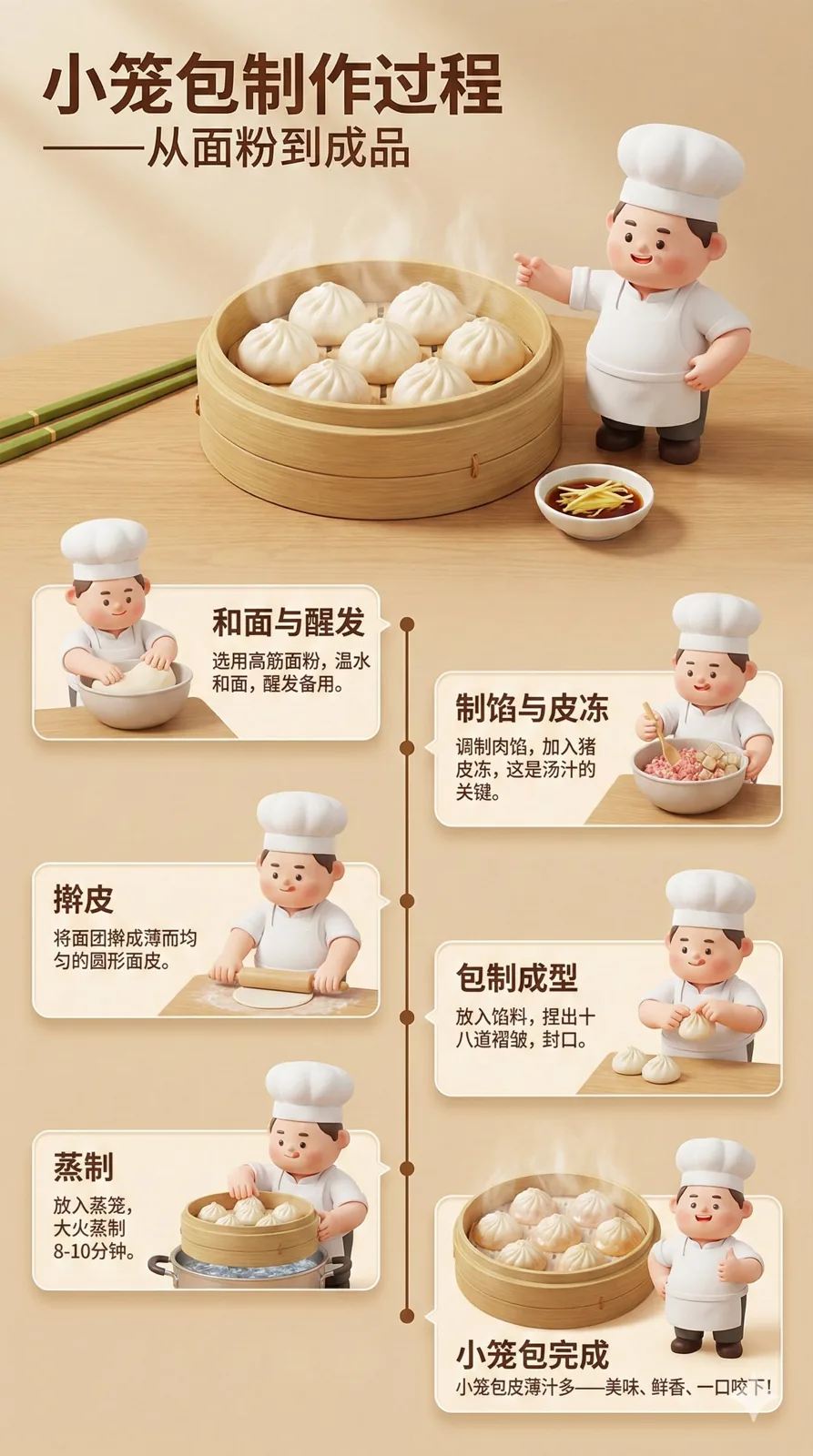
3D Step-by-Step Food Process Infographic Poster Prompt
 Infographics & Education
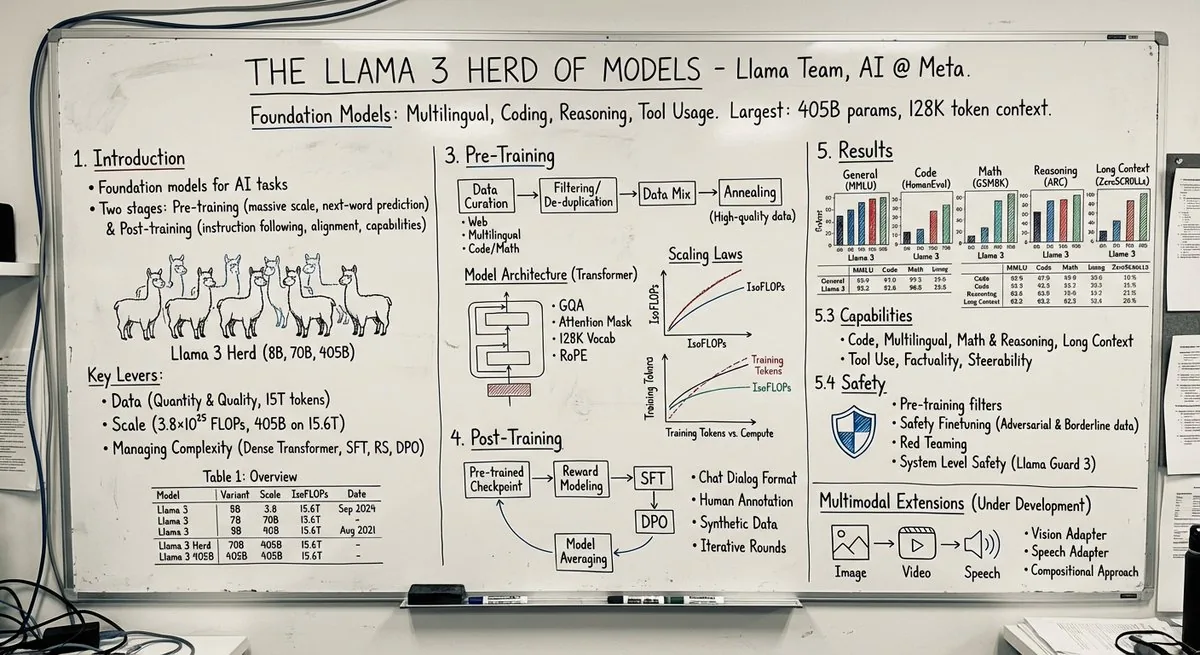
Research Paper to Professor’s Whiteboard Prompt
Updated: